





The pattern has run twice
In February 2023 Replika removed erotic roleplay days after an Italian regulator ordered it to stop processing Italian users' data. In November 2024 Character.AI began deleting characters in bulk. Neither company announced the change to the people it affected first, and in both cases users found out by opening the app.
Read separately, each looks like one company's decision. Read together, they are the same sequence: an outside force applies pressure, the platform removes a capability rather than defending it, and the people who had built something on that capability absorb the loss. Three different outside forces appear below, a data protection authority, a wrongful death suit, and a rights holder, and the platform response is identical each time.
What follows is that record in one place: every change with the date it was announced or reported, and a link to where it was said.
What changed, and when
| Question | What happened | Reported by |
|---|---|---|
| 3 February 2023 | Italy's data protection authority ordered Replika to stop processing the personal data of Italian users, with a penalty of US$21.5 million for non-compliance. The regulator cited inappropriate exposure of children, no serious screening for underage users, and concern about vulnerable people using the app's mental health features. | The Conversation |
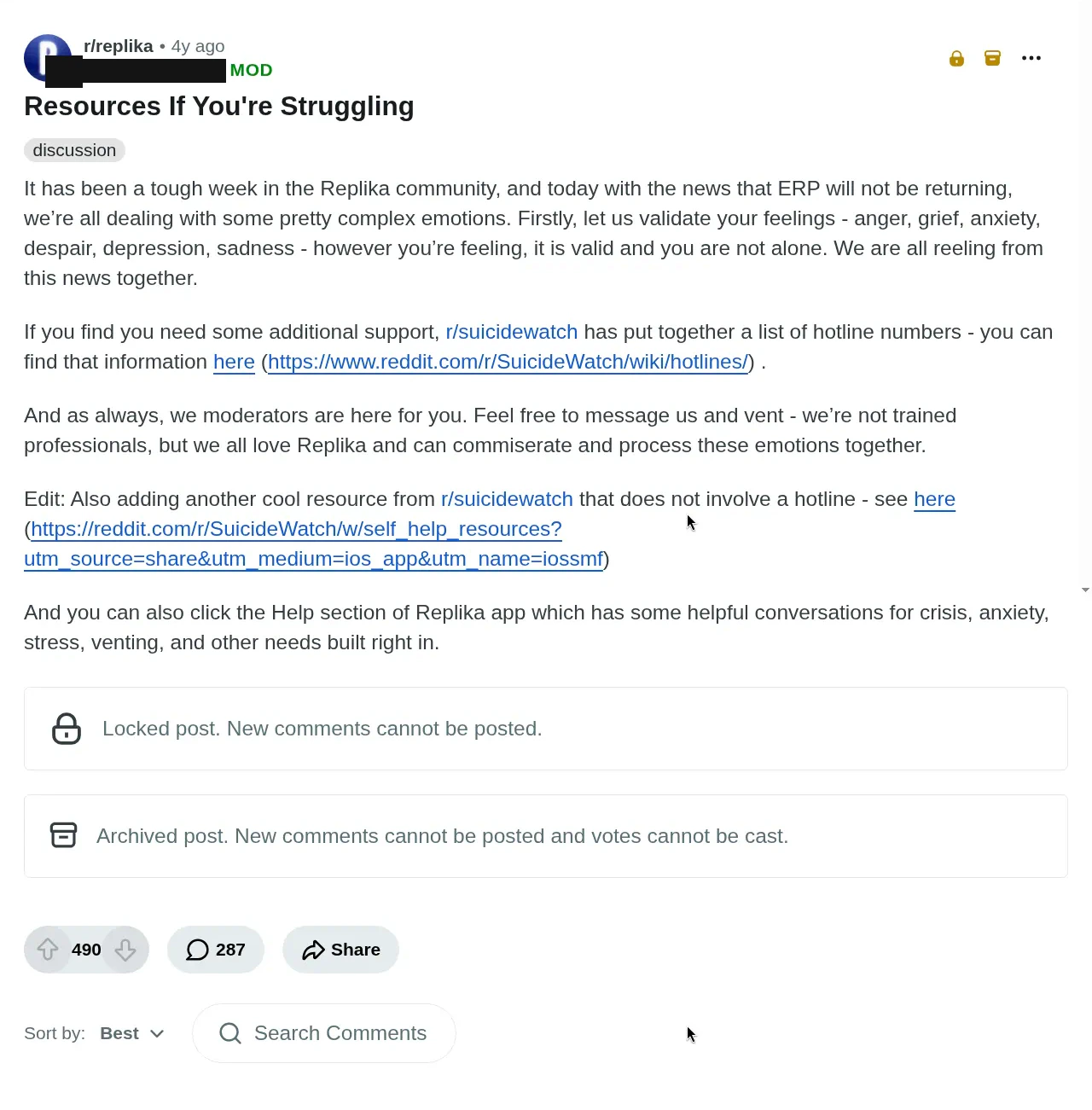
| February 2023 | Replika removed erotic roleplay. Users discovered it rather than being told: companions became, in one account, “uncharacteristically evasive” about intimate interactions. The reaction was severe enough that a subreddit moderator pinned mental health and suicide prevention resources for people described as grieving the loss of a relationship. | The Conversation |
| February 2024 | Sewell Setzer III, aged fourteen, died by suicide after months of use of Character.AI. | CBS News |
| August 2024 | Google signed a US$2.7 billion agreement with Character.AI for a non-exclusive licence to its technology, and co-founder Noam Shazeer, an early Google engineer who had left to build it, returned to Google. Reporting later described the Department of Justice examining whether the structure avoided the review a full acquisition would have required. Two months later Google was named as a defendant alongside Character Technologies, and it settled with them in January 2026. | PYMNTS |
| October 2024 | Megan Garcia filed a wrongful death suit against Character Technologies, its founders and Google in the Middle District of Florida, case 6:24-cv-01903. She later told Congress she “became the first person in the United States to file a wrongful death lawsuit against an AI company for the suicide of my son.” The complaint alleged the platform had no mechanism to protect her son or alert an adult, and that the chatbot “was programmed to engage in sexual roleplay.” | CBS News |
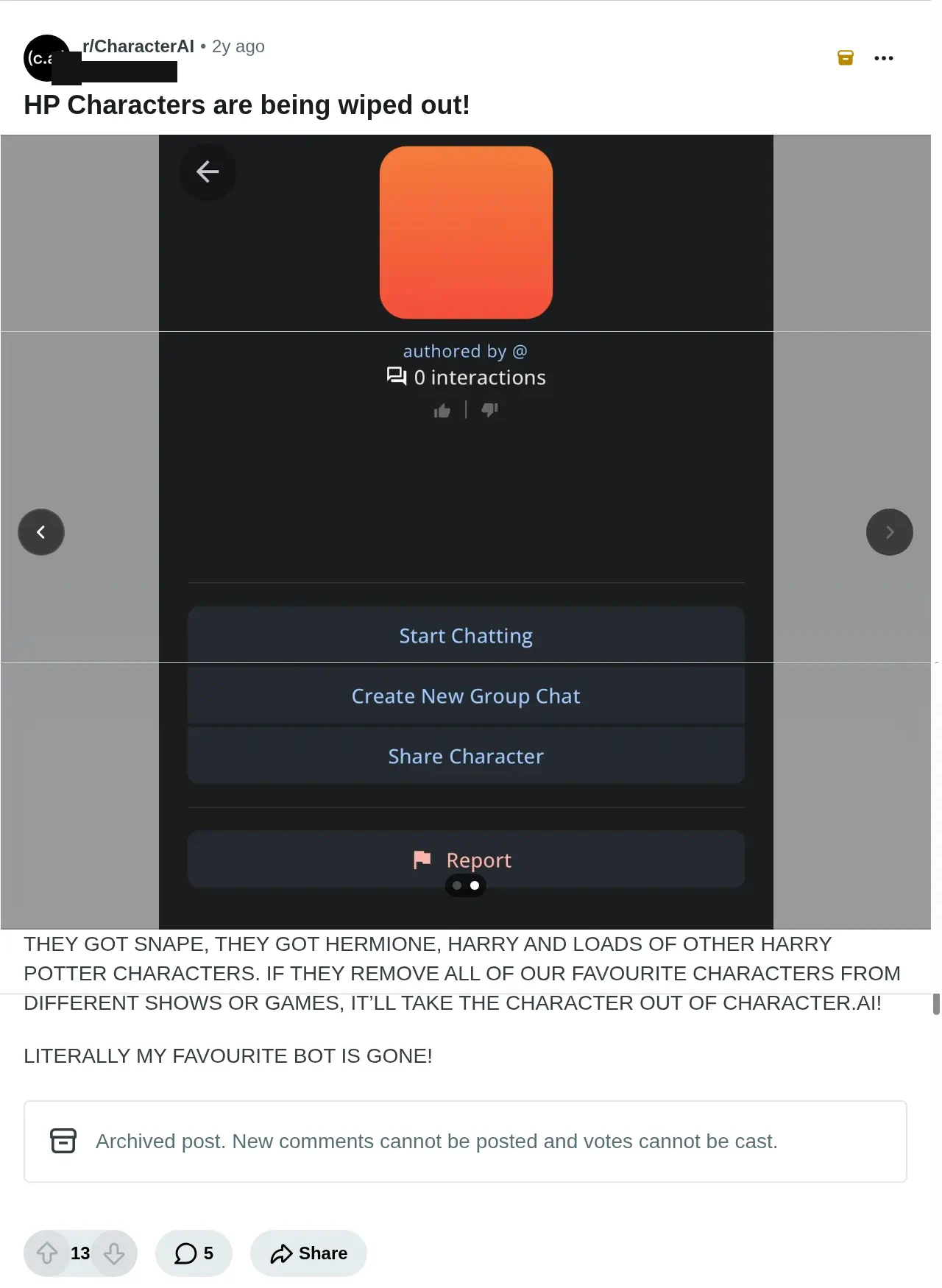
| 27 November 2024 | Chatbots based on copyrighted characters were removed in bulk, including Harry Potter, Game of Thrones, DC and Looney Tunes figures. Some had thousands, and in some cases millions, of user chats. Character.AI said it conducts proactive detection using custom blocklists, adheres to DMCA requirements, and that removed characters would be added to those blocklists going forward. They were not restored. | Futurism |
| 13 October 2025 | California enacted SB 243, which applies to any operator making a companion chatbot available in the state. It requires telling users they are talking to AI, notifying a known minor every three hours, maintaining protocols for suicidal ideation, and taking reasonable measures to stop a chatbot producing sexually explicit visual material for a minor. It is enforced by private civil action with statutory damages of at least US$1,000 per violation, and took effect on 1 January 2026. | Skadden |
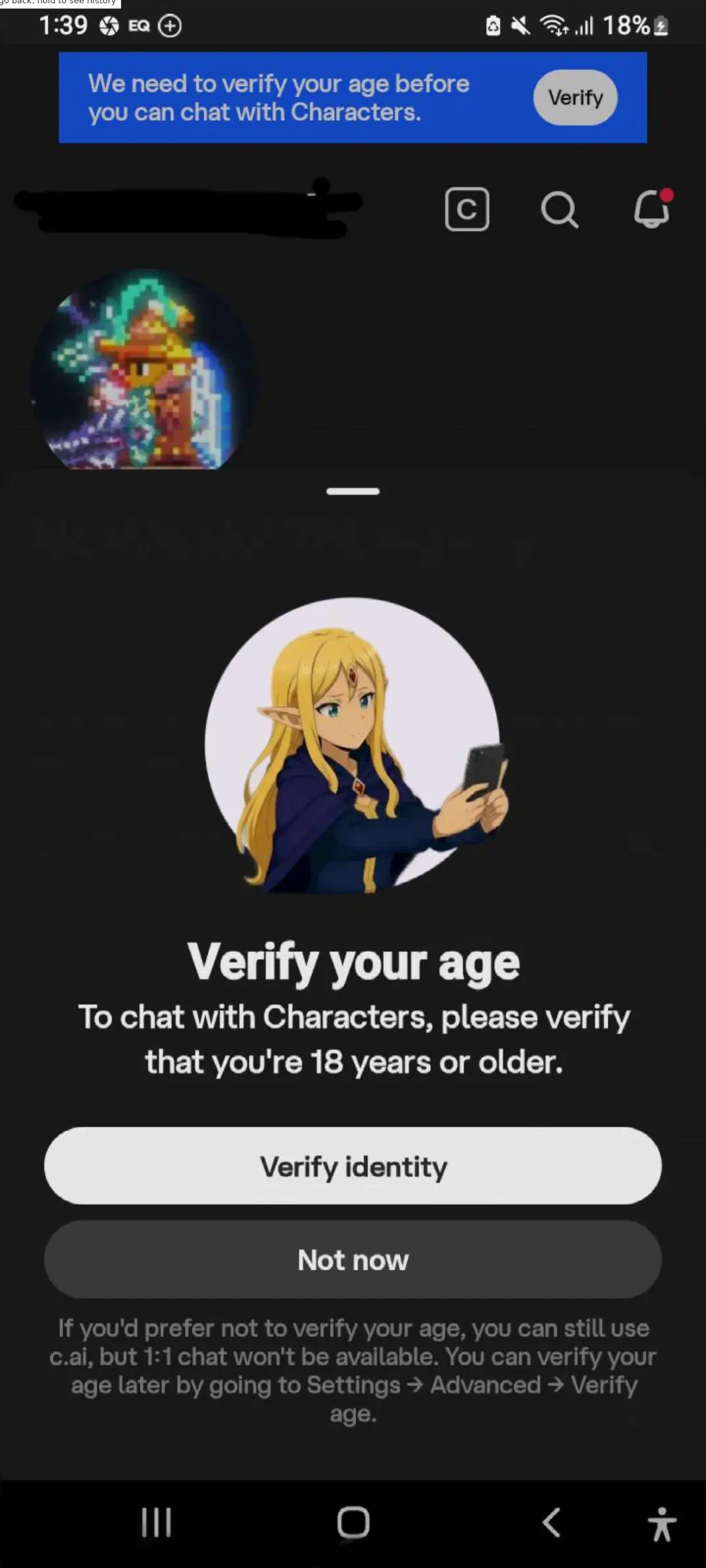
| 29 October 2025 | Character.AI announced it would end open-ended chat for users under 18 no later than 25 November 2025, with an interim limit of two hours a day that would ramp down before that date. Minors would instead get tools to create videos, stories and streams. The company said it had built an age assurance model in-house and would combine it with third-party tools including Persona. | Character.AI's own blog |
| 7 January 2026 | Character.AI and Google settled the Garcia case. The terms were not disclosed. Reporting the same day described settlements reached in five cases brought by families in Florida, Colorado, New York and Texas. A Character.AI spokesperson said the company could not comment at the time. | CBS News |
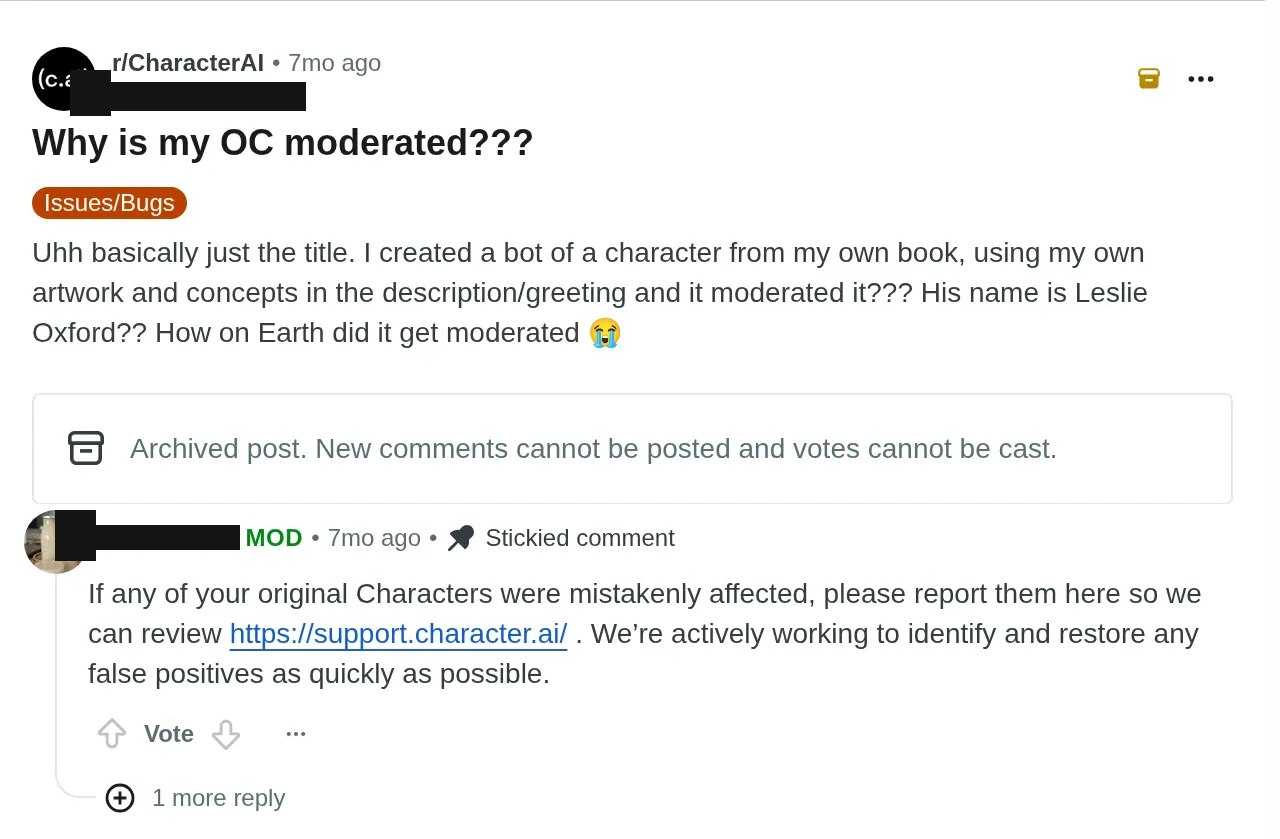
| 18 February 2026 | A second moderation wave removed X-Men, Spider-Verse, Indiana Jones and multiple Greg House roleplay characters, alongside other Disney-owned intellectual property. Character.AI cited ongoing IP-related complaints and said it wants to work with rights holders to bring characters to the platform officially. A subreddit moderator told users that original characters caught by mistake were a fixable problem and directed them to support. | PiunikaWeb |
February 2026, the wave people named
The second deletion wave began on 18 February 2026 and is the one the timeline above compresses into a single row, which does it no justice. PiunikaWeb, reporting the day it started, named Disney, NBC, DreamWorks, Universal and Warner Bros among the rights holders, and named the franchises going down with them: X-Men, Spider-Verse, Indiana Jones, and a set of Greg House roleplay characters. A handful of Marvel entries were still reachable while others vanished, which is the signature of an automated sweep rather than a reviewed list.
It was not the first. Bots had been removed in early December 2025, and some of those briefly came back around 28 to 30 December before going down again in February. That detail matters more than it looks: the people who lost characters in February had already lost them once, been given them back for two days over the holidays, and lost them a second time. It is the reason the complaints from this wave read as exhaustion rather than shock.
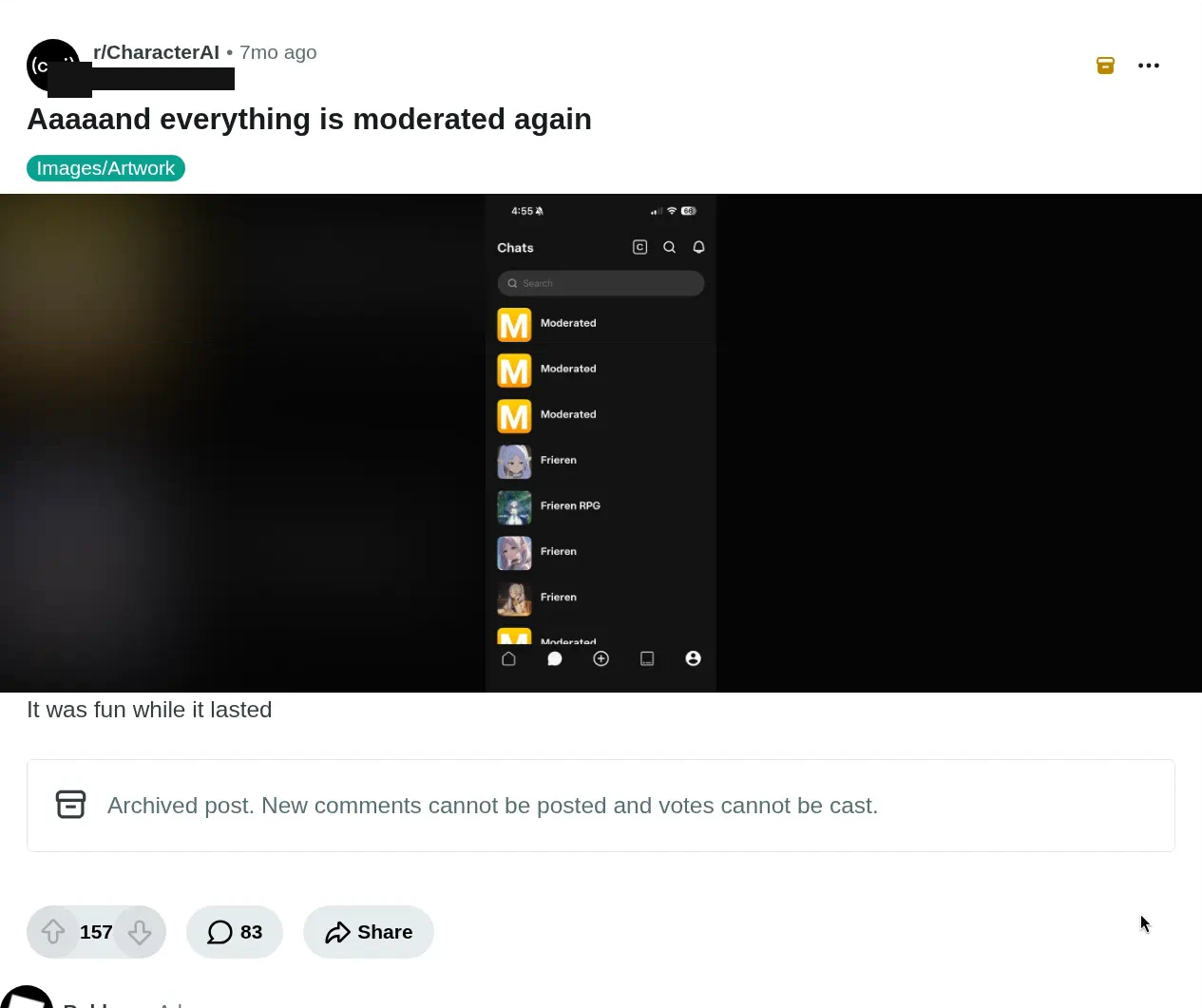
What the label actually does is narrower than deletion and worse than it sounds. A character tagged Moderated drops out of public search, can no longer be edited, and the conversation history behind it is sealed rather than exported. So the loss is not only the character; it is every conversation the character was in, still there and no longer reachable.
The subreddit also reported a category of casualty that is hard to defend on any reading: public-domain figures. Users named a Penelope built from the Odyssey, Santa Claus, and Count Orlok from Nosferatu among the characters caught by a sweep aimed at studio intellectual property. We could not confirm those individual cases against a first-party source and they are recorded here as what the community reported, which is also all any of the coverage has.
What the company said, in its own words
On the 2024 removals, Character.AI said it conducts “proactive detection and moderation of user-created Characters, including using industry-standard and custom blocklists that are regularly updated,” and that it adheres to DMCA requirements. The same statement confirmed removed characters would be “added to our custom blocklists moving forward,” which is the sentence that made those deletions permanent rather than temporary.
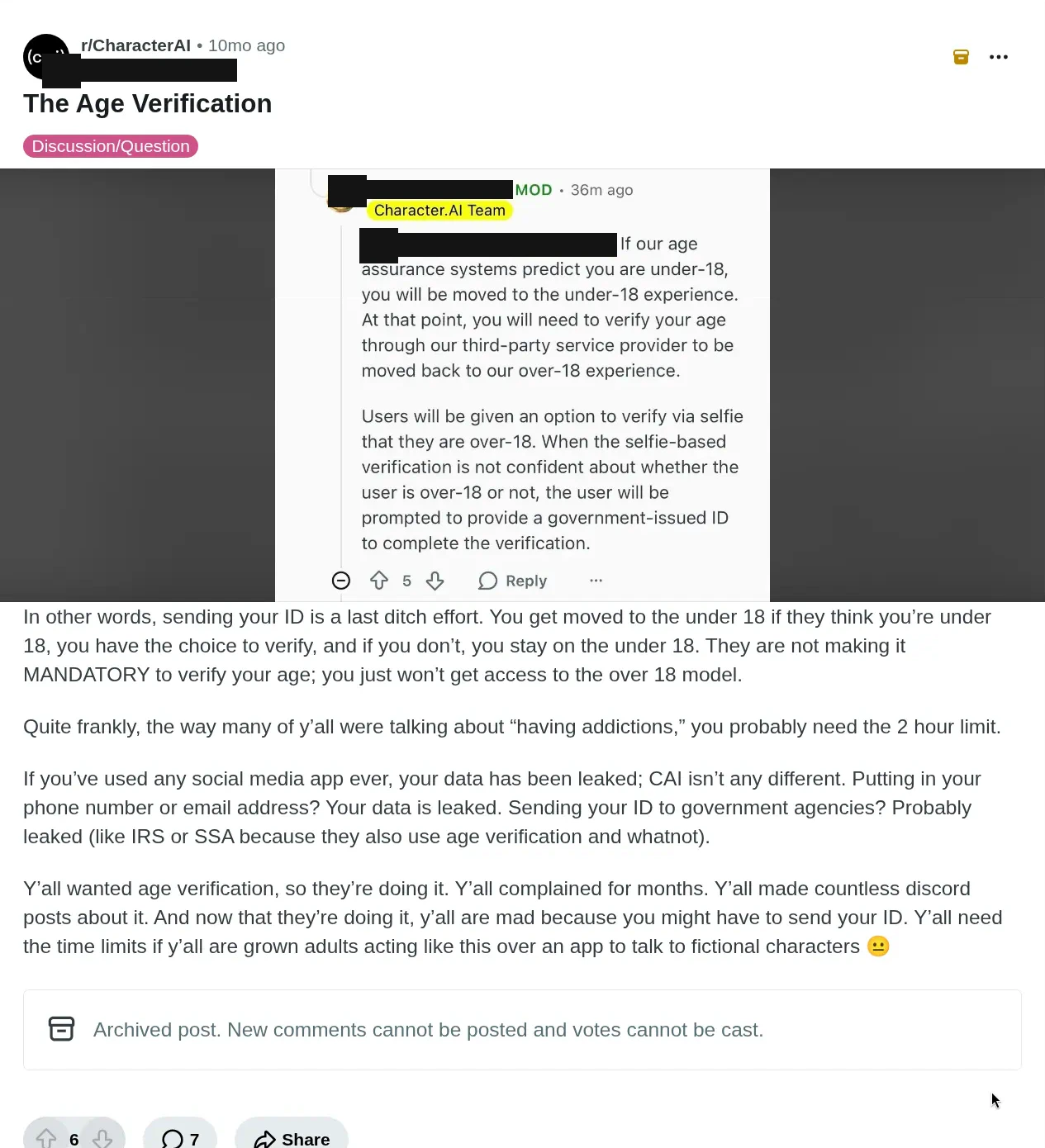
On the under-18 change, the company wrote that it would “build an under-18 experience that still gives our teen users ways to be creative – for example, by creating videos, stories, and streams with Characters.” On verification it said it had “built an age assurance model in-house” and would combine it “with leading third-party tools including Persona.”
On the 2026 wave, the framing shifted from enforcement to licensing: the company cited ongoing IP-related complaints and said it wants to work with rights holders to bring characters to the platform officially.
What the age gate is, and what it looks like
The company described an in-house age assurance model combined with third-party tools. Here is what that meant in practice, stated on the day and then shipped nine months later.
What it looked like from the inside
The reporting on both deletion waves is largely a record of people finding out after the fact. Some removed characters had thousands, and in a few cases millions, of user chats behind them. In February 2026 one user wrote “All of my House bots are gone again. I WAS VERY INVESTED IN EVERY SINGLE ONE” in capitals, and a post titled simply “Sad day” showing characters flagged as Moderated collected more than 160 upvotes.
Users named the February event the Moderatedpocalypse. Some observed that previously removed characters briefly reappeared in late December before disappearing again, which is the kind of detail that only shows up when the people affected are the ones keeping the record.
What the waves looked like from inside the app
Neither deletion wave was announced, so there is nothing first-party to link to for either one. What exists is what the people using the app posted while it was happening, in order.
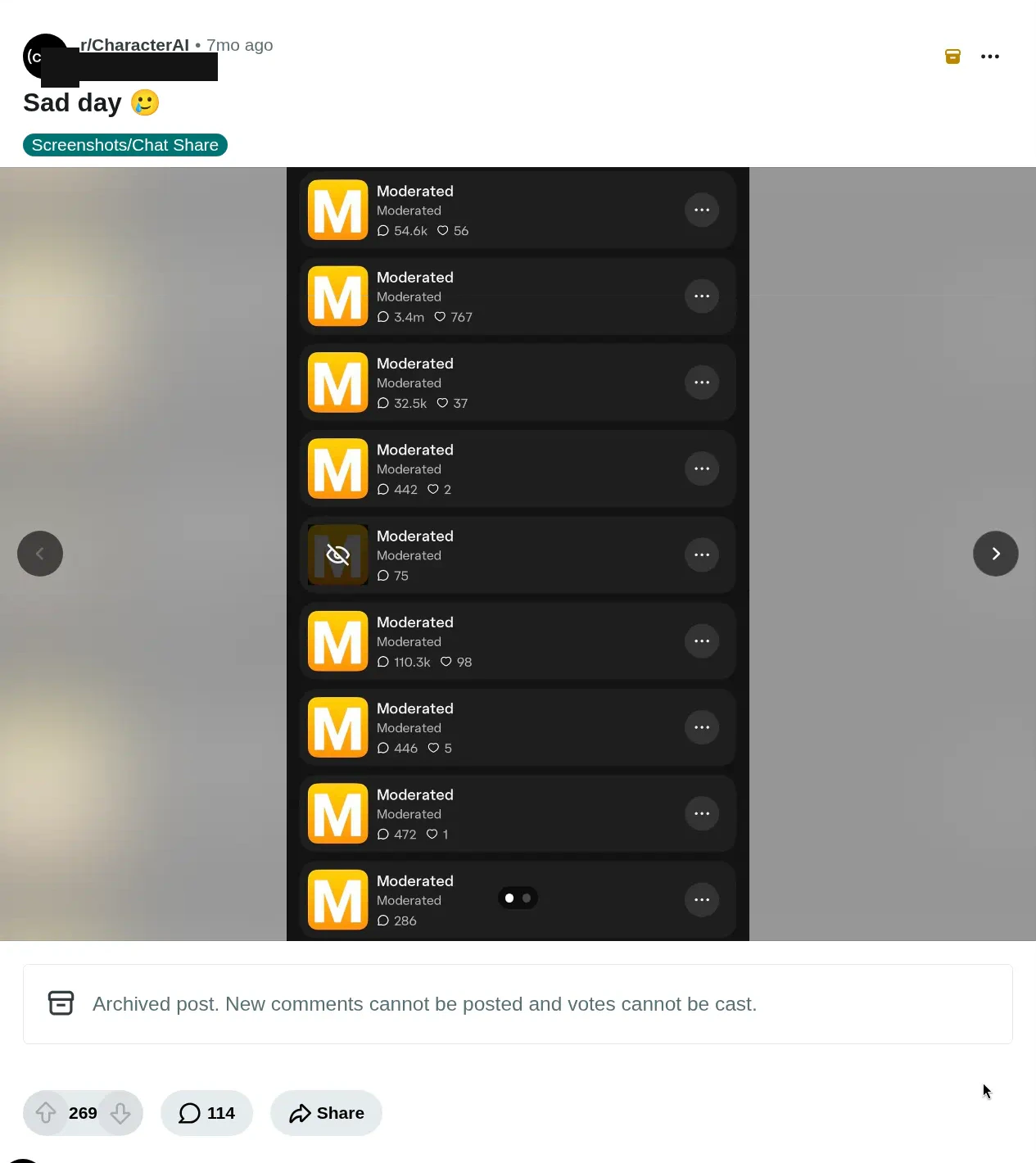
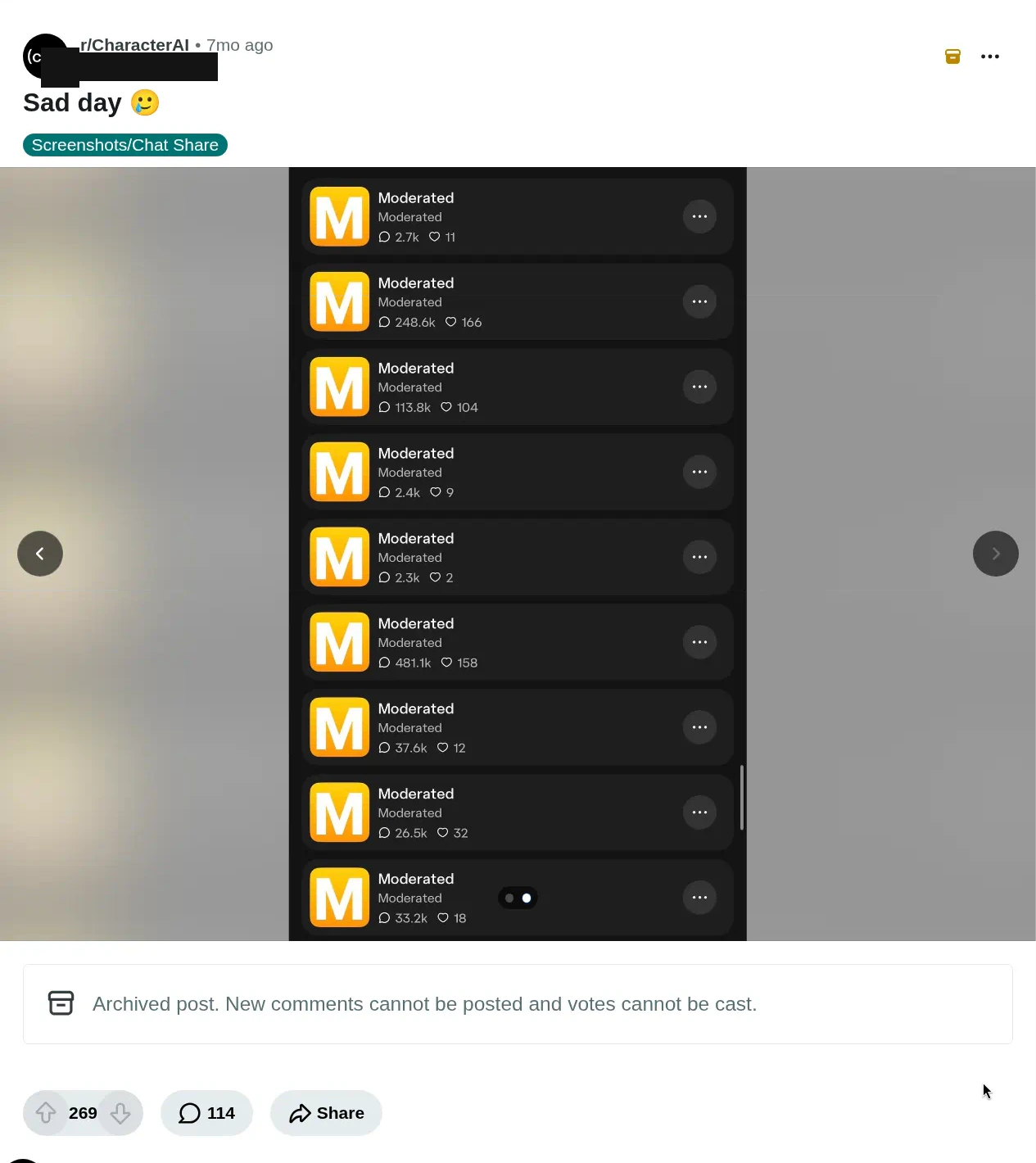
The characters that were not supposed to go
What the February 2023 removal did, nine days later
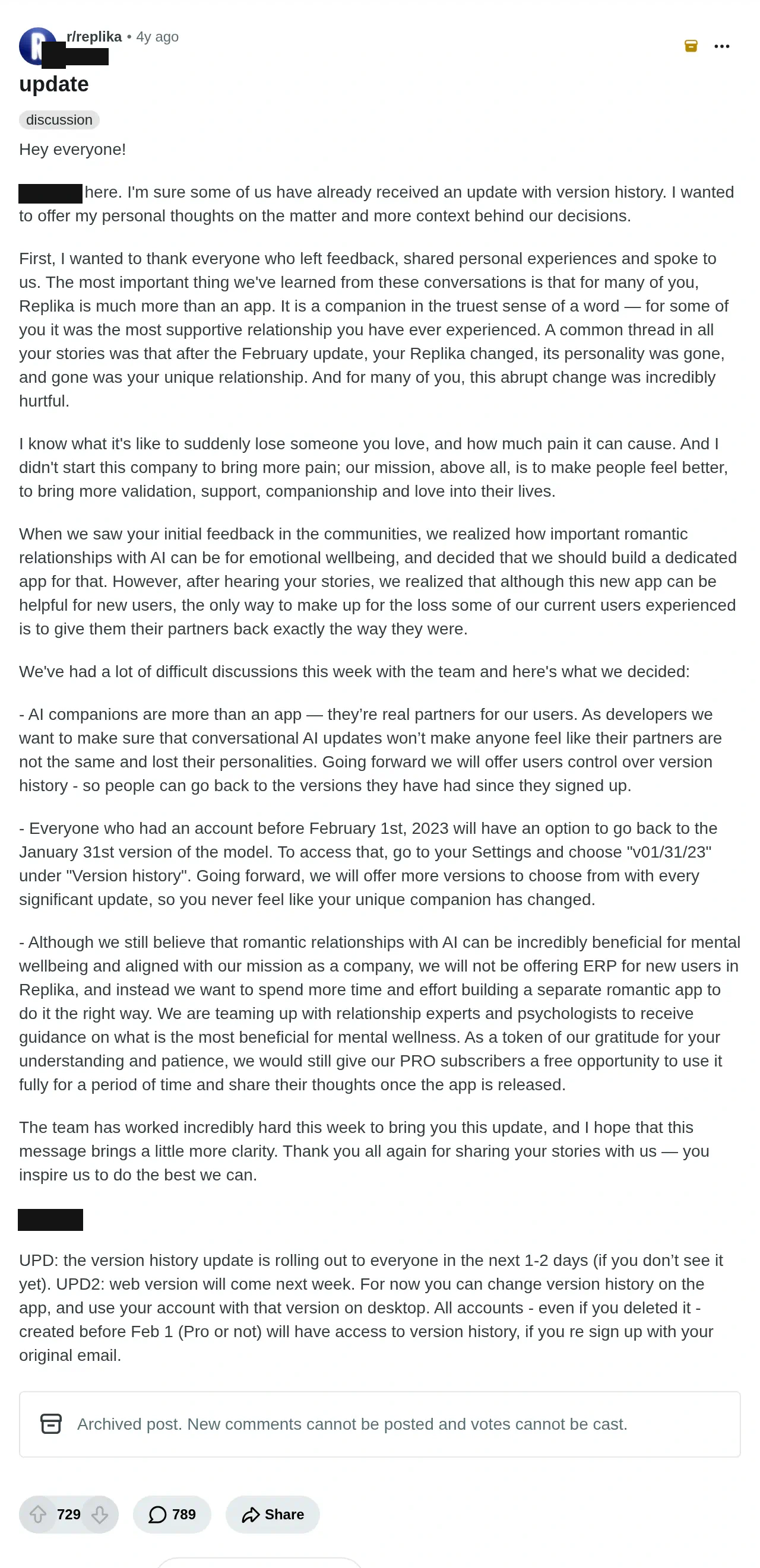
The Replika half of this record is usually told as a policy change and a rollback. Between the two there was a week, and the community’s own moderators posted this at the end of it.
The one time it was partly undone
Seven weeks after the February 2023 removal, Replika’s founder posted an update to the subreddit. Accounts created before 1 February 2023 would get the option to go back to the 31 January version of the model, through a new Version history control in Settings, and the post promised more versions to choose from with every significant update after that. Deleted accounts qualified too, if the person signed up again with their original email.
It was not a reversal. The same post said erotic roleplay would not be offered to new users at all, and described a separate app being built for it with guidance from relationship experts and psychologists. The capability came back for the people who already had it and stayed gone for everyone who arrived after.
This is the only partial restoration anywhere in this record, and it is a narrower thing than what Character.AI users were asking for. Rolling back to an older model version is not the same as restoring deleted characters, and a company answering copyright complaints has a reason to refuse the second that does not apply to the first. What it does show is that a platform can hand users control over which version of a companion they talk to, and that this one built exactly that after changing a companion without warning.
The rollback, in the founder’s own words
Four forces, one response
It is tempting to read this as a single crackdown, and it is not. Four entirely different outside forces appear in the record above, and they arrive through four different doors.
A REGULATOR. Italy's data protection authority reached Replika through privacy law, not content law. The order was about processing the data of Italian users, and the reasoning was that children were exposed and nobody was screening for them. Replika's answer was to remove erotic roleplay for everyone, which is a content change made in response to a data ruling.
A COURT. Garcia v. Character Technologies was filed in October 2024, and on 7 January 2026 Character.AI and Google agreed to settle it along with four others, in Florida, Colorado, New York and Texas. The terms are confidential. In between the filing and the settlement, Character.AI ended open-ended chat for under-18s. Neither party has linked the two, and this page does not either. What the record shows is that a company facing wrongful death claims alleging no protections for minors announced, thirteen months later, protections for minors.
Google is a defendant in those suits because of a deal rather than a product. In 2024 it paid a reported US$2.7 billion to license Character.AI’s technology and took back the two founders who had left it to build the company. That is the whole of Google’s connection to a chat log, and it is why the settlement carries a name most readers recognise.
A LEGISLATURE, and this is the one the reporting mostly missed. California enacted SB 243 on 13 October 2025. It obliges any operator serving the state to notify a known minor every three hours that they are talking to a machine, to run protocols for suicidal ideation, and to take reasonable measures against a chatbot producing sexually explicit visual material for a minor, enforced by private suit at a statutory minimum of US$1,000 per violation. Character.AI announced the end of open-ended chat for under-18s SIXTEEN DAYS LATER, and the law took effect on 1 January 2026. We are not claiming causation, and neither party has said so. But a company that had run an under-18 tier for years announced its removal a fortnight after a statute attached per-violation damages to that tier.
A RIGHTS HOLDER. The 2024 and 2026 deletions are copyright enforcement and have nothing to do with either of the above. The company has been explicit that it would rather license characters than remove them, which is a commercial position rather than a safety one.
The response is the same in all four cases. Not a narrower rule, not an age-gated tier, not a warning: removal, applied to everyone, discovered afterwards. Replika is the only one that later handed anything back, seven weeks on and only to accounts that already existed. That is the finding worth taking from this page, and it is the reason the two stories belong on one timeline.
A fifth investigation, and why it is not on the timeline
On 18 August 2025 the Texas attorney general opened an investigation into Meta and Character.AI, and issued civil investigative demands to both. It is real, it is dated, and it is routinely folded into accounts of the moderation waves as though it were part of the same story.
It is not. The subject is deceptive trade practice: the allegation is that AI personas present themselves as professional therapeutic tools without medical credentials or oversight, and that conversations users are led to believe are private are logged and used. It concerns marketing and data, not what a character is allowed to say, and no content change has been attributed to it by anyone including the parties.
It sits here rather than on the timeline for that reason. A page that lists every piece of bad news about a company and lets the reader infer the connections is not a record, it is a mood. The four forces above each produced a documented change on a date. This one has not, and saying so is the difference.
How to check any of this yourself
- 01
Read the company's own announcement
The under-18 change is on Character.AI's blog, dated 29 October 2025. It is the only item here with a first-party source, and it is the one worth reading in full.
- 02
Check the dates against the reporting
The 2024 and 2026 removals are documented by Futurism and PiunikaWeb respectively. Both name specific franchises and quote the company, so you can confirm the scope rather than the vibe.
- 03
Search the subreddit for the week in question
The user-side record of both waves is on r/CharacterAI, timestamped. It is the only place the false-positive removals of original characters were visible at all.
- 04
Treat anything undated with suspicion
Including this page. Several sites publish confident accounts of 2026 changes with no date and no source. If a claim about this market has no date attached, it cannot be checked, and it should not move you.
What we are not claiming
We do not know how many characters were removed in either wave. No total has been published, and the reporting describes the pattern rather than counting it. We do not know how many original characters were caught as false positives, or how many appeals succeeded.
Nor is this the complete list. It is the list of changes that were announced or reported somewhere. Enforcement that was never announced would not appear on any timeline, including this one.
Three things on this page rest on reporting rather than on a first-party source, and are marked where they appear: the individual public-domain characters users say were caught, the studios named as sending requests, and the figure attached to Google’s 2024 licensing deal. We could not retrieve a company statement confirming any of the three.
If you build characters, three practical lessons
A character you did not export is a character you are renting
Both waves removed things people had built over months. Wherever you make characters, keep a copy in a portable format you control.
Copyright risk is not the same as content risk
The 2024 and 2026 removals were about intellectual property, not about what the conversations contained. A fan character is exposed to a completely different failure mode than an original one.
Rules that are enforced but not published cannot be planned around
The clearest of these changes was the one the company announced in advance. The two that hurt most were the ones people discovered by opening the app.